
Android XR and Project Moohan: Samsung’s Vision Pro Rival Explained
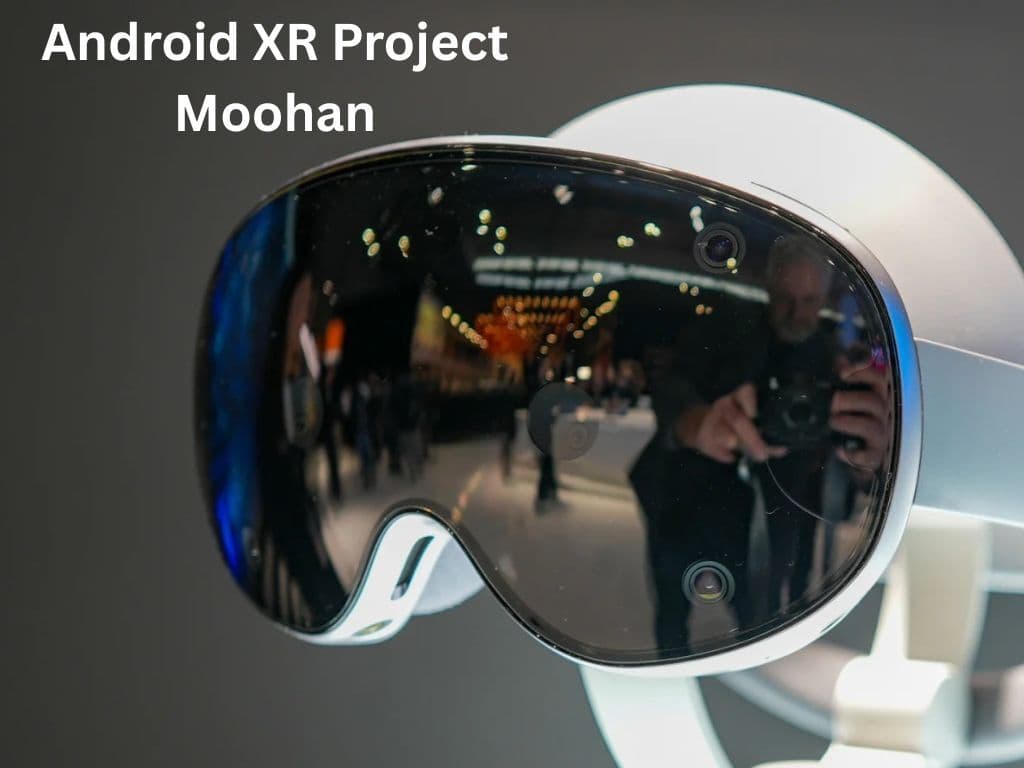
Samsung officially launched Project Moohan in October 2025, marking its triumphant return to extended reality with a sophisticated headset developed in partnership with Google and Qualcomm. Named “Moohan”—meaning “infinity” in Korean—this device represents Samsung’s ambitious vision for spatial computing powered by Android XR, Google’s new operating system designed specifically for immersive experiences across headsets and smart glasses. After years of speculation and strategic planning following the discontinuation of Gear VR, Samsung emerges with a competitive product positioned directly against Apple’s Vision Pro and Meta’s Quest lineup.
The Android XR platform that powers Project Moohan reflects Google’s renewed commitment to extended reality after the commercial failure of Google Glass and the eventual discontinuation of Cardboard and Daydream VR initiatives. Unlike those earlier attempts, Android XR benefits from dramatic advances in artificial intelligence, particularly Gemini integration that enables natural voice interactions and contextual awareness that earlier assistants couldn’t achieve. This foundation positions Project Moohan not merely as another VR headset but as an AI-powered spatial computer that understands your environment and anticipates your needs.
Project Moohan Hardware: Premium Specifications Meet Thoughtful Design
The Project Moohan headset showcases Samsung’s hardware engineering expertise through premium components and thoughtful industrial design choices that balance capability with comfort. At the heart of the device sits Qualcomm’s Snapdragon XR2+ Gen 2 processor, the most powerful mobile chip designed specifically for extended reality applications. This silicon provides the computational horsepower necessary for rendering high-resolution virtual environments, running sophisticated AI models, and processing sensor data from multiple cameras simultaneously without thermal throttling or performance degradation.
The display system features micro-OLED panels delivering an impressive 3,000 DPI resolution that significantly exceeds the Meta Quest 3’s 1,200 DPI specification. This exceptional pixel density eliminates the screen-door effect that plagued earlier VR headsets, creating sharp text readability and fine detail visibility that makes extended work sessions comfortable. The high-resolution displays prove particularly important for productivity scenarios where users need to read documents, review spreadsheets, or write code for extended periods without eye strain or fatigue.
“Project Moohan weighs notably less than Apple’s 600-gram Vision Pro while maintaining premium build quality, featuring a rigid strap with tightening dial system and external battery pack connected via cable for better weight distribution and extended runtime without increasing headset mass.”
The passthrough camera system enables high-quality mixed reality experiences where virtual content seamlessly blends with your physical surroundings. Multiple downward-facing and forward-facing cameras capture your environment in full color, allowing natural hand tracking and eye tracking without requiring controllers for most interactions. The camera placement reduces the need for excessive arm movement during gesture control, addressing a common fatigue issue with systems requiring users to hold their hands at shoulder height for extended periods.
Samsung includes magnetic light seals that users can customize to control ambient light intrusion, providing flexibility between fully immersive virtual reality experiences and mixed reality scenarios where seeing your physical environment matters. This modularity represents a practical approach recognizing that different applications benefit from different levels of immersion—watching movies might demand complete isolation while collaborative work sessions benefit from peripheral awareness of your actual surroundings.
The external battery pack connected via USB-C cable shifts weight away from your head, improving comfort during extended wear sessions. This design philosophy mirrors the Vision Pro’s approach while offering the practical advantage that users can swap battery packs for continuous operation or use higher-capacity third-party batteries for marathon sessions. The USB-C connection also enables charging while in use, effectively providing unlimited runtime when near power sources.
Android XR: Google’s Ambitious Operating System Strategy
Android XR represents Google’s most comprehensive attempt yet at creating an extended reality platform capable of scaling across diverse form factors from full headsets to lightweight smart glasses. Announced in December 2024 and officially launching with Project Moohan in October 2025, the operating system leverages Google’s expertise in Android development while incorporating lessons learned from previous XR initiatives that failed to achieve commercial success or lasting market impact.
The platform’s architecture emphasizes openness and developer accessibility, positioning Android XR as the Android equivalent for spatial computing in contrast to Apple’s closed Vision Pro ecosystem. Google provides familiar development tools including ARCore for spatial mapping, Android Studio for application creation, Jetpack Compose for UI development, Unity for game creation, and OpenXR for cross-platform compatibility. This developer-friendly approach lowers barriers to entry for creating XR applications while ensuring compatibility across different hardware implementations from various manufacturers.
Gemini AI integration distinguishes Android XR from competing platforms, bringing Google’s advanced large language model directly into spatial computing experiences. Unlike traditional voice assistants that require specific command structures and often misunderstand natural language, Gemini enables conversational interactions where users can ask follow-up questions, provide context through visual references, and receive nuanced responses that demonstrate genuine understanding rather than keyword matching.
The multimodal nature of Gemini proves particularly powerful in XR environments where users can point at objects and ask questions, circle areas for detailed information, or verbally describe what they’re trying to accomplish while the system provides contextual assistance. During demonstrations, users could point at landmarks in Google Maps and receive detailed historical information, geological facts, or climbing statistics without needing to precisely articulate search queries that traditional systems require.
Android XR implements sophisticated spatial computing capabilities including advanced hand tracking that recognizes complex gestures, eye tracking for precise selection through gaze, and environmental understanding that maps physical spaces to enable proper occlusion where virtual objects correctly hide behind real-world furniture. These capabilities create convincing mixed reality experiences where digital content feels genuinely present in your physical environment rather than obviously overlaid.
Competitive Positioning: Challenging Vision Pro and Quest
Project Moohan enters a competitive XR market dominated by Meta’s Quest lineup at the affordable end and Apple’s Vision Pro at the premium segment. Samsung and Google strategically position their offering between these extremes, targeting an expected $999-1,299 price point that undercuts Vision Pro’s $3,499 cost while delivering premium experiences that justify pricing above Quest 3’s $499 starting price. This middle-ground strategy aims to capture consumers who want sophisticated XR capabilities without Vision Pro’s extreme pricing.
Compared to Vision Pro, Project Moohan offers several advantages including lighter weight that reduces fatigue during extended use, swappable battery packs that enable longer sessions without interruption, and integration with the broader Android ecosystem that billions of users already inhabit. The open platform approach also means more developers can create applications without the exclusive approval processes and revenue sharing requirements that characterize Apple’s walled garden ecosystem.
However, Vision Pro maintains advantages in display quality through its incredibly high-resolution micro-OLED panels, sophisticated EyeSight external display that shows your eyes to others, and deep integration with Apple’s ecosystem including seamless connectivity with Mac computers and iPhones. The Vision Pro’s advanced eye tracking also enables more precise selection compared to Project Moohan’s combined hand and eye tracking approach, though real-world usage will determine whether this precision advantage matters for typical applications.
“Android XR’s open-platform philosophy contrasts sharply with Apple’s walled garden strategy, enabling multiple hardware manufacturers to create compatible devices while giving developers greater flexibility in application distribution and monetization strategies.”
Against Meta’s Quest lineup, Project Moohan competes on premium build quality, display resolution, processing power, and AI capabilities that Quest devices currently lack. Meta’s advantage lies in an established content library with thousands of VR games and applications already available, aggressive pricing enabled by Meta’s willingness to subsidize hardware costs, and years of experience refining XR user interfaces and interaction patterns that newer platforms must replicate or improve upon.
Samsung’s extensive Galaxy ecosystem provides strategic advantages including seamless connectivity with Galaxy smartphones, integration with SmartThings smart home platform, and potential synergies with other Samsung hardware like tablets and wearables. For users already invested in Samsung’s ecosystem, Project Moohan represents a natural extension of their existing device family rather than introducing an entirely foreign platform requiring new accounts and service subscriptions.
The Developer Preview and App Ecosystem Challenge
Google released Android XR in developer preview format in December 2024, providing select partners early access to hardware and development tools for creating launch applications. This strategy mirrors successful platform launches where robust app ecosystems exist from day one rather than forcing early adopters to endure “chicken and egg” scenarios where limited applications discourage adoption while low adoption discourages application development.
The Android XR developer community benefits from Google’s established relationships with application developers who already create Android phone and tablet apps. Many existing applications can be adapted for XR environments with reasonable development effort, particularly productivity tools, media players, and utility apps that don’t require complete interface redesigns. This portability provides a faster path to comprehensive app ecosystems compared to entirely new platforms requiring all applications to be built from scratch.
However, truly compelling XR applications require thoughtful spatial computing design that leverages the unique capabilities of headsets and glasses rather than simply displaying traditional 2D interfaces in virtual space. Google must inspire developers to create innovative experiences that justify XR hardware adoption while maintaining backward compatibility with simpler adaptations during the platform’s early growth phase. Striking this balance between accessibility and innovation will significantly influence Android XR’s ultimate success or failure.
Use Cases: Productivity, Entertainment, and Beyond
Project Moohan targets diverse use cases spanning productivity, entertainment, education, and specialized professional applications. For productivity, the headset enables multi-window workspaces where users can arrange multiple virtual displays surrounding them in 3D space, effectively creating unlimited monitor configurations constrained only by comfortable viewing angles. This capability proves valuable for professionals who benefit from simultaneously viewing multiple documents, communication tools, reference materials, and application windows.
The high-resolution displays and comfortable ergonomics make extended work sessions feasible, potentially replacing physical monitors for certain workflows where portability or space constraints make traditional setups impractical. Remote workers could carry their entire office setup in a backpack, establishing productive workspaces in hotel rooms, coffee shops, or co-working spaces without depending on available monitor infrastructure. Collaboration features enable virtual meetings where participants appear as realistic avatars occupying shared virtual spaces, creating presence and engagement that traditional video calls cannot match.
Entertainment applications showcase XR’s immersive potential through virtual theaters that recreate cinema experiences on demand, immersive gaming that places players inside virtual worlds with natural movement and interaction, and 180-degree video content that surrounds viewers with captured experiences. YouTube integration provides access to Google’s massive video library including VR-specific content, 3D videos enhanced with AI-generated depth, and traditional 2D content presented on customizable virtual screens.
Google Maps takes on new dimensions in XR, enabling users to explore locations virtually through Street View imagery that surrounds them, plan trips by walking through destinations before physically visiting, and receive contextual information about landmarks by simply looking at them and asking Gemini questions. This spatial navigation represents a fundamentally different experience compared to viewing maps on flat screens, potentially making route planning and geographic exploration more intuitive and engaging.
Smart Glasses: The Future Beyond Headsets
While Project Moohan represents Android XR’s immediate focus, Google’s platform ambitions extend to lightweight smart glasses that provide augmented reality capabilities without the bulk and social stigma associated with full headsets. The Project Astra smart glasses prototype demonstrated at Google I/O showcases Google’s vision for AI-powered wearables that understand your environment and provide contextual assistance throughout daily activities.
These glasses leverage Raxium’s microLED technology—acquired by Google for approximately $1 billion—enabling bright, visible displays without excessive power consumption that would drain batteries quickly. The lightweight form factor makes all-day wear practical, transforming smart glasses from occasional-use gadgets into persistent computing platforms that users naturally incorporate into daily routines similar to how smartphones became constant companions.
Gemini AI integration proves even more compelling in smart glasses where users benefit from real-time information overlays, translation services that display foreign language text in your native language, navigation directions that appear directly in your field of view, and contextual assistance that activates automatically based on what you’re viewing. Google describes the experience as similar to J.A.R.V.I.S. from Marvel’s Iron Man—an intelligent assistant that understands context and provides helpful information proactively rather than requiring constant explicit queries.
However, smart glasses face significant challenges including battery life constraints given their minimal size, social acceptance concerns after Google Glass’s failure highlighted privacy worries and social awkwardness, and technical limitations of cramming capable processors and displays into eyeglass form factors without excessive heat or weight. Google’s measured approach with Project Astra prototypes rather than immediate commercial release suggests the company recognizes these challenges and intends addressing them thoroughly before mass-market launches.
The Broader XR Market Context
Project Moohan and Android XR enter an XR market experiencing renewed momentum after years of hype cycles that failed to deliver mainstream adoption. Apple’s Vision Pro legitimized spatial computing for skeptics who dismissed VR as gaming novelty, though its extreme pricing limited actual market penetration. Meta continues investing billions annually in Reality Labs despite sustained losses, demonstrating confidence in XR’s eventual mainstream success despite current niche status.
Enterprise adoption leads consumer uptake, with businesses in logistics, healthcare, training, and collaboration increasingly deploying XR solutions that deliver measurable productivity improvements and cost savings. These professional applications establish viable markets while technology matures and costs decline enough for broader consumer appeal. Samsung’s extensive B2B relationships through divisions like Samsung Heavy Industries position the company to leverage enterprise opportunities that consumer-focused competitors might overlook.
The content library challenge remains substantial despite developer interest in new platforms. Established ecosystems like Quest and PSVR2 offer thousands of applications developed over years, creating network effects where users stay because their applications exist while developers create applications because users exist. Android XR must either convince existing developers to port content or inspire creation of compelling new experiences that justify platform switching for consumers accustomed to mature ecosystems.
Geographic differences influence adoption patterns, with Asian markets particularly South Korea, Japan, and China showing higher willingness to adopt XR hardware compared to Western markets where smartphones satisfy most computing needs. Samsung’s strong position in Asian markets provides advantages for building installed base that creates momentum for application development and ecosystem growth that can subsequently expand into Western territories.
Challenges and Open Questions
Despite the impressive technology and strategic partnerships, Project Moohan and Android XR face substantial challenges that will influence their ultimate success. Pricing remains officially unannounced but rumors suggest $999-1,299 range that positions the device as premium purchase requiring clear value proposition justification. Consumers must understand why spending four figures on XR headsets provides benefits beyond smartphones and traditional computers that already serve their needs adequately.
Battery life represents another concern given the external pack design. While swappable batteries provide flexibility, the reality of managing charging cycles and carrying spare batteries adds friction compared to devices with internal batteries lasting multiple days. Real-world runtime under typical usage patterns remains unconfirmed, and user experiences may vary dramatically based on application types and usage intensity.
The application ecosystem’s growth trajectory will largely determine Android XR’s fate. Early adopters tolerate limited app selections if platforms show clear promise, but mainstream users expect comprehensive functionality across productivity, entertainment, communication, and utilities. Google and Samsung must cultivate thriving developer communities producing high-quality applications that showcase XR advantages rather than merely adapting existing 2D applications for headset viewing.
Social acceptance challenges persist despite technological advances. Wearing headsets in public remains socially awkward, limiting use cases to private spaces unless smart glasses achieve mainstream acceptance. The external battery pack and cable also complicate portability compared to truly wireless devices, though this design choice prioritizes comfort and flexibility over ultimate convenience.
Timeline and Availability
Samsung officially launched Project Moohan at its “Worlds Wide Open” event on October 21, 2025, with retail availability beginning shortly after. The company had previously showcased the headset at MWC 2025 in Barcelona during March, though those demonstrations involved look-but-don’t-touch exhibitions that generated interest without providing hands-on experiences for most attendees. Select media and developers received early access for testing and application development in preparation for the consumer launch.
Initial availability will likely focus on Samsung’s strongest markets including South Korea, United States, and Western Europe, with expansion to additional territories based on demand and supply chain capacity. The device will be sold through Samsung’s own channels including its website and brand stores, with potential carrier partnerships in markets where subsidized pricing arrangements make sense for promoting adoption among existing Galaxy customers.
Google’s broader Android XR strategy extends beyond Samsung’s initial hardware to additional manufacturers who will create their own XR devices running the platform. This approach mirrors Android’s smartphone success where multiple hardware partners create diverse products serving different price points and use cases. However, the timeline for additional Android XR devices remains unclear, with most manufacturers likely adopting wait-and-see approaches based on Project Moohan’s market reception.
The smart glasses running Android XR won’t appear until later, with Google indicating general 2026 timeframe without providing specific dates. These devices require additional technological refinements before reaching production-ready status, and Google’s cautious approach after Glass’s failure suggests the company won’t rush to market before comprehensively addressing technical limitations and social concerns that undermined earlier attempts.
Conclusion: Ambitious Entry Into Spatial Computing Future
Project Moohan represents Samsung and Google’s most ambitious attempt at capturing meaningful share of the emerging spatial computing market before it consolidates around established players. The collaboration leverages each company’s strengths—Samsung’s hardware engineering and manufacturing capabilities, Google’s software expertise and AI leadership, and Qualcomm’s specialized silicon—creating a compelling alternative to Apple and Meta’s approaches that emphasizes openness, AI integration, and ecosystem flexibility.
Whether Project Moohan succeeds depends on execution across hardware reliability, software polish, application ecosystem development, and marketing that convinces consumers of genuine advantages over existing computing devices. The technology appears promising based on early demonstrations, but promising prototypes don’t guarantee commercial success in competitive markets where established players benefit from years of refinement and installed user bases that create powerful network effects.
The broader Android XR platform’s success matters more than any single device, as Google’s strategy depends on multiple manufacturers creating compatible hardware that collectively builds critical mass for developer attention and consumer adoption. If Android XR achieves the ubiquity that Android enjoys in smartphones, spatial computing could finally transition from niche curiosity to mainstream computing platform. But that outcome requires sustained commitment from Google, Samsung, and other partners through inevitable challenges that characterize any platform’s early years.
For comprehensive coverage of Android XR developments, Project Moohan availability, and extended reality market trends, follow official Google announcements and dedicated technology news sources tracking the spatial computing landscape. The coming months will reveal whether this ambitious initiative represents XR’s breakthrough moment or another premature attempt requiring additional technological maturation before mainstream success becomes achievable.