
Google Announces Major Google Play Policy Changes: Billing Flexibility, Lower Fees & a New App Store Program
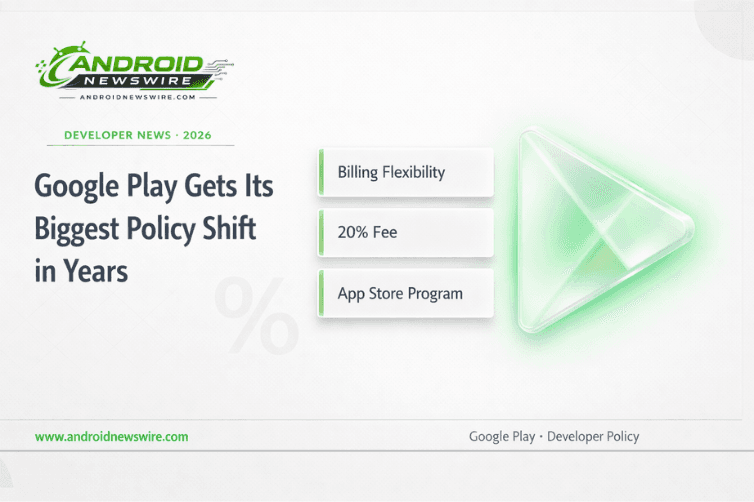
Google has unveiled one of the most significant overhauls to its Google Play ecosystem in years — giving developers more freedom over how they collect payments, introducing a formal pathway for third-party app stores to operate on Android, and cutting service fees in ways that could meaningfully boost developer revenue. Here is everything you need to know.
The announcement marks a clear turning point for the Android app economy, one that has been quietly building under pressure from regulators, courts, and competing platforms around the world. For developers who have long argued that Google’s tight grip on Play Store billing was costing them too much, this update delivers real, tangible relief.
What Is Actually Changing on Google Play?
Google’s policy update touches three distinct areas: billing systems, app store distribution, and service fee structures. Each change operates independently but together they form a cohesive shift toward a more open Android ecosystem.
1. Developers Can Now Use Their Own Billing Systems
The most developer-friendly change in this update is the introduction of genuine billing choice. Previously, apps distributed through Google Play were required to use Google Play Billing for in-app purchases — with few exceptions. That requirement is now gone for a much broader range of developers.
Under the new policy, developers can choose from two paths: integrate their own payment processor directly inside their app alongside Google Play Billing, or redirect users to an external website to complete the purchase outside the app environment entirely. Both options are now officially permitted and supported within Google’s updated developer guidelines.
This is a significant win for subscription-based apps, digital content platforms, and any developer whose margins have historically been squeezed by mandatory Play Store payment processing. For context on how this differs from Apple’s still-restrictive approach, The Verge’s ongoing App Store policy tracker offers useful background reading.
2. The Registered App Store Program
Google is formalizing something Android has technically always allowed in principle but made difficult in practice: third-party app stores. The new Registered App Store program gives alternative marketplaces — think F-Droid, Samsung Galaxy Store, Amazon Appstore, or new entrants — a streamlined installation process on Android devices.
Registered stores will benefit from a smoother, less friction-heavy install flow for end users, reducing the warning screens and manual permission steps that currently make sideloaded store installations feel risky or complicated to mainstream consumers.
This development follows closely on the heels of the ongoing coalition calling for more Android openness, which saw over 40 organizations including Proton, AdGuard, and the Tor Project push back against Google’s developer verification policies. The Registered App Store program can be read partly as Google acknowledging that Android’s open reputation needs structural backing, not just rhetoric.
3. Lower and Separated Service Fees
Perhaps the most immediately impactful change for smaller developers is the new fee structure. Google is now splitting its service charge into two components:
- A 20% service fee applied to new app installs that generate in-app purchases
- A separate payment processing fee of approximately 5% in major regions
Previously, the blended rate for most developers sat at 30% — the same rate that drew years of criticism and the landmark Epic Games v. Google antitrust lawsuit. The new structure brings Google closer to industry alternatives and removes the all-or-nothing feel of the old single commission.
For apps generating significant subscription or in-app purchase revenue, the difference between a 30% and a roughly 25% blended rate adds up quickly. Developers should review Google’s updated Play Billing policy documentation directly to understand how their specific app category is classified.
Why This Is Happening Now
These changes do not exist in a vacuum. Google has faced sustained regulatory and legal pressure across multiple jurisdictions — from the European Union’s Digital Markets Act requirements, to court rulings in the United States following Epic’s lawsuit, to legislative action in South Korea and India. The policy shift is Google’s way of getting ahead of mandated changes by voluntarily implementing reforms that satisfy regulators while retaining as much platform control as possible.
The timing also aligns with broader Android ecosystem momentum noted at MWC Barcelona 2026, where Google positioned Android as the most open major mobile platform — a claim that now carries somewhat more weight with these policy shifts in place.
What This Means for Developers in Practice
For indie developers and small studios, the reduced fees and billing flexibility remove two of the biggest barriers that previously made the Play Store feel like a toll road. Developers who use subscription models — fitness apps, productivity tools, media platforms — stand to benefit most from the ability to route payments through their own processor at a lower combined cost.
For enterprise and mid-size app companies, the Registered App Store program opens a genuine distribution alternative. Companies building internal tooling, enterprise applications, or region-specific app catalogs can now establish a registered distribution channel without routing everything through Play Store review cycles.
For users, the most visible change may come through third-party stores gaining easier access to Android devices, expanding the range of apps available outside Google’s curation — including apps that have historically been rejected from Play on policy grounds rather than security concerns.
The Bigger Picture for the Android Ecosystem
Taken together, these changes represent the largest single adjustment to Google Play’s commercial model since the platform launched. They reflect a mature platform responding to market and regulatory reality — but they also open genuine new possibilities for developers who have felt constrained.
The Android app economy is shifting. Developers who move quickly to understand the new billing options, evaluate the Registered App Store opportunity, and recalculate their revenue projections under the new fee structure will be best positioned to benefit.
Google has confirmed the changes are rolling out progressively. Developers should consult the Android Developers Blog for the official implementation timeline and eligibility criteria specific to their app category.
Related Reading on Android News Wire: