Google Settles With Epic Games — Play Store Commissions Drop to 20% and Fortnite Returns to Android
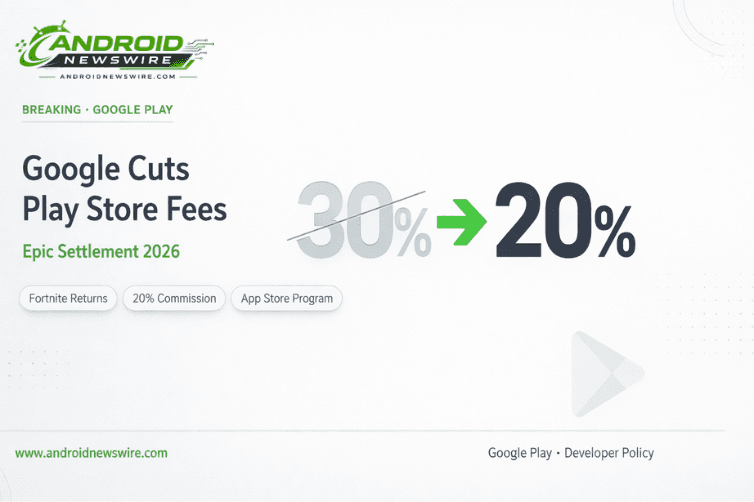
After years of legal battles, courtroom drama, and industry-wide debate about mobile app marketplace fairness, Google and Epic Games have finally buried the hatchet. The settlement — announced on March 4, 2026 — triggers one of the most consequential restructurings of the Google Play Store’s commercial model in its history, cutting base commissions, separating billing fees, launching a new app store program, and bringing Fortnite back to Google Play globally.
For Android developers, this is not background noise. The new fee structure goes live by June 30, 2026 in the US, UK, and European Economic Area — meaning the economics of your app’s revenue model may be about to change materially, and planning should start now.
The Settlement in Plain Language
The dispute between Google and Epic has its roots in Epic’s decision to implement its own in-app payment system inside Fortnite in 2020 — a direct violation of Google Play’s billing policies at the time. Google removed Fortnite from the Play Store, Epic sued, and what followed was a years-long antitrust battle that played out across multiple jurisdictions worldwide.
The resolution arrived this week in the form of a sweeping policy overhaul that satisfies Epic’s core demands while allowing Google to frame the changes as a proactive step toward a more open Android ecosystem. Google said it “resolved our disputes worldwide with Epic Games” as part of announcing the new policy changes.
As part of the agreement, Epic Games will bring Fortnite back to the Google Play Store globally, while also investing in its own alternative app store — the Epic Games Store for Android. Android Developers Epic’s CEO Tim Sweeney called it a victory for the entire developer community, saying the changes turn Android into “a true open platform with competition among stores.”
The New Google Play Commission Structure — Every Rate Explained
This is the section every Android developer needs to read carefully. The old blended 30% rate (or 15% for recurring subscriptions after year one) is being replaced by a more transparent, separated fee model.
Here is how the new structure breaks down:
Base Service Fee:
- 20% on in-app purchases for new app installs
- 10% on recurring subscriptions
Billing System Add-On:
- An additional 5% if developers choose to use Google’s own billing system (rather than their own or a third-party processor)
This means a developer who uses their own payment processor will pay a maximum of 20% — down from 30%. A developer who uses Google Play Billing will pay up to 25% combined — still a meaningful reduction from the previous standard rate.
Developer Program Discounts:
Google is also launching new developer programs — an Apps Experience Program and a revamped Google Play Games Level Up program — both of which incentivize developers to build quality experiences on Android. Developers who opt into these programs will pay only a 15% commission on transactions from new app installs, versus the standard 20%.
Regional Rollout Timeline:
- June 30, 2026 — United States, European Economic Area (EEA), United Kingdom
- September 30, 2026 — Australia
- December 31, 2026 — South Korea and Japan
- September 30, 2027 — Global rollout completes
This phased timeline reflects the varying regulatory environments in each market. Developers with international audiences should map their revenue projections against each region’s activation date. For a full breakdown of how these changes fit into Google’s wider policy overhaul announced this week, see our detailed coverage of Google Play’s biggest policy shift in years, covering billing flexibility and the new app store program.
The Registered App Stores Program — What It Means for Alternative Distribution
One of Epic’s most significant grievances was not just about money — it was about the friction Google deliberately built into the sideloading experience. Installing any app from outside the Play Store involved multiple scary-sounding security warnings that discouraged mainstream users from ever completing the process.
The Registered App Stores program directly addresses this. Approved stores must meet certain quality and safety requirements set by Google. Once approved, users who sideload those stores will encounter a simplified, less alarming installation flow — rather than the multi-step warning gauntlet that currently exists.
The program is launching in markets outside the United States first. Once the settlement receives full court approval, it will launch in the US as well.
For the open-source and privacy-focused Android development community, this development connects directly to the broader campaign covered earlier this year. The coalition of 40+ organizations including Proton, AdGuard, and the Tor Project demanding Google keep Android open has long argued that third-party distribution deserved formal platform support — not just a theoretical permission that came buried in hostile UX. The Registered App Stores program is, at minimum, a partial answer to those demands.
Fortnite Returns to Google Play — And Brings Its Own Store Too
The headline for gaming fans is unambiguous: Fortnite is coming back to the Google Play Store. The game was absent from Android’s flagship marketplace since Epic triggered the legal confrontation in 2020 by bypassing Google’s billing system to avoid the 30% commission.
Fortnite’s return will be available globally through the Play Store, restoring access to the hundreds of millions of Android users who were either unable to find it, unwilling to navigate the sideloading process, or simply unaware the game was available outside the Play Store.
Simultaneously, Epic is investing in the Epic Games Store for Android as a standalone alternative marketplace. This dual approach — returning to Google Play while building a competing store — is textbook Epic strategy: use the settlement’s improved distribution terms to reach the maximum audience, while using the Registered App Stores program to establish an independent distribution channel for the long term.
For other game developers and large app publishers watching this, the Epic Games Store for Android represents a genuine new distribution alternative that may arrive with built-in brand recognition and a user base already familiar with Epic’s PC storefront.
How This Changes the Android Ecosystem Power Balance
The significance of this settlement extends beyond the specific numbers. For years, the 30% commission was the defining grievance of the mobile app economy — a topic that consumed courtrooms, regulatory hearings, and developer conference panels on both Android and iOS simultaneously.
Google’s willingness to settle and restructure — rather than continue fighting — signals that the regulatory and competitive environment has shifted enough that defending the old model is no longer viable. The EU’s Digital Markets Act, South Korea’s mandatory payment system laws, and the persistent global antitrust scrutiny all created a context in which these changes were increasingly inevitable.
What Google has done is get ahead of those mandates by packaging the changes as a settlement victory — giving it control over the narrative and the implementation timeline, rather than having terms imposed externally.
For Android developers, the practical impact is straightforwardly positive. Lower fees mean more revenue per transaction, more competitive pricing options for users, and more flexibility to experiment with pricing models that were previously uneconomical at the 30% rate.
Developers building subscription products should pay particular attention to the new 10% recurring subscription rate — a dramatic improvement over the previous 15% (after year one) that Apple still charges on iOS. This gap may become a meaningful factor in platform decisions for new subscription-first products. It also connects to the broader developer momentum we covered in our weekly roundup of the top Android developer stories for March 2026.
What Epic’s Tim Sweeney Said
Epic Games praised the settlement in an official statement, saying the changes will “evolve Android into a true open platform with competition among stores.” On X, Epic Games CEO Tim Sweeney responded to the news with a simple “THANKS GOOGLE!” calling the settlement “a better deal for all developers.” Android Developers
Sweeney’s enthusiasm is understandable — Epic effectively extracted significant commercial and structural concessions from Google through sustained legal pressure, and did so without the prolonged court battle that its parallel dispute with Apple has involved. The Apple case remains unresolved, with Apple most recently winning a partial reversal of an earlier court ruling in December 2025.
What Android Developers Should Do Right Now
The June 30, 2026 effective date for US, UK, and EEA markets gives developers roughly three and a half months to prepare. Here is a practical checklist:
1. Recalculate your revenue model. Run your current transaction volume against both the 20% standard rate and the 15% developer program rate to understand your new expected margins under each scenario.
2. Evaluate billing system options. The 5% Google Play Billing add-on is now explicitly separated. If you are already integrated with a third-party payment processor, quantify the saving. If you are not, assess whether the integration cost is justified by the fee reduction.
3. Review the developer program eligibility criteria. The Apps Experience Program and Play Games Level Up program both offer the 15% new install rate — evaluate whether qualifying for either program is achievable within your roadmap.
4. Monitor the Registered App Stores program. If you operate or plan to operate an alternative distribution channel, registering should be on your Q2 2026 roadmap. This also connects to the broader Android 17 platform changes — including the new developer-facing features coming in the March 2026 Pixel Feature Drop — that are reshaping what distribution looks like on Android.
5. Read Google’s official blog post. The Android Developers Blog announcement contains the authoritative detail on eligibility, timelines, and program specifics.
Related on Android News Wire: